
 Home
Home About Us
 Services
 Products
 Activities
 News
News Contact


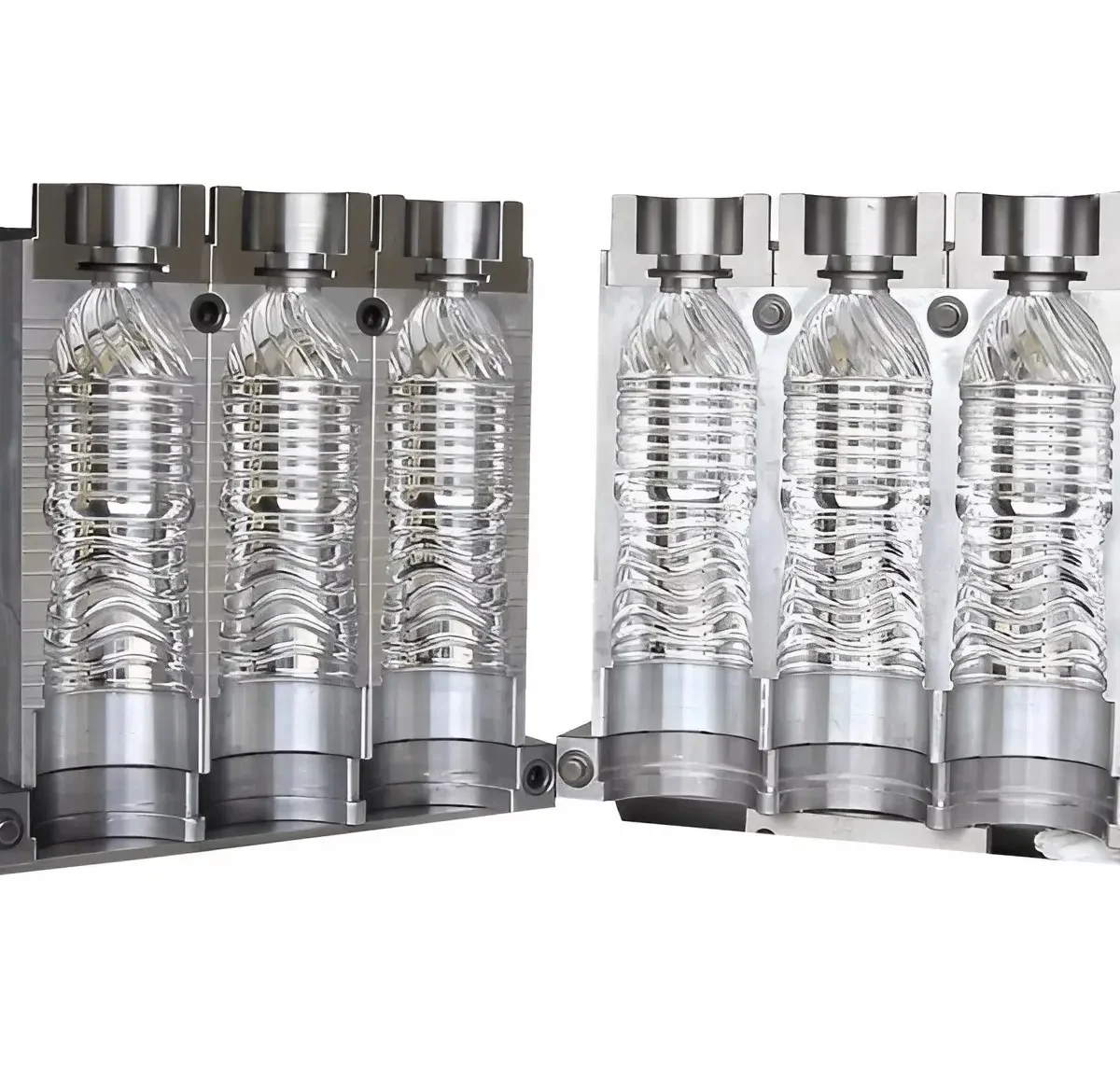
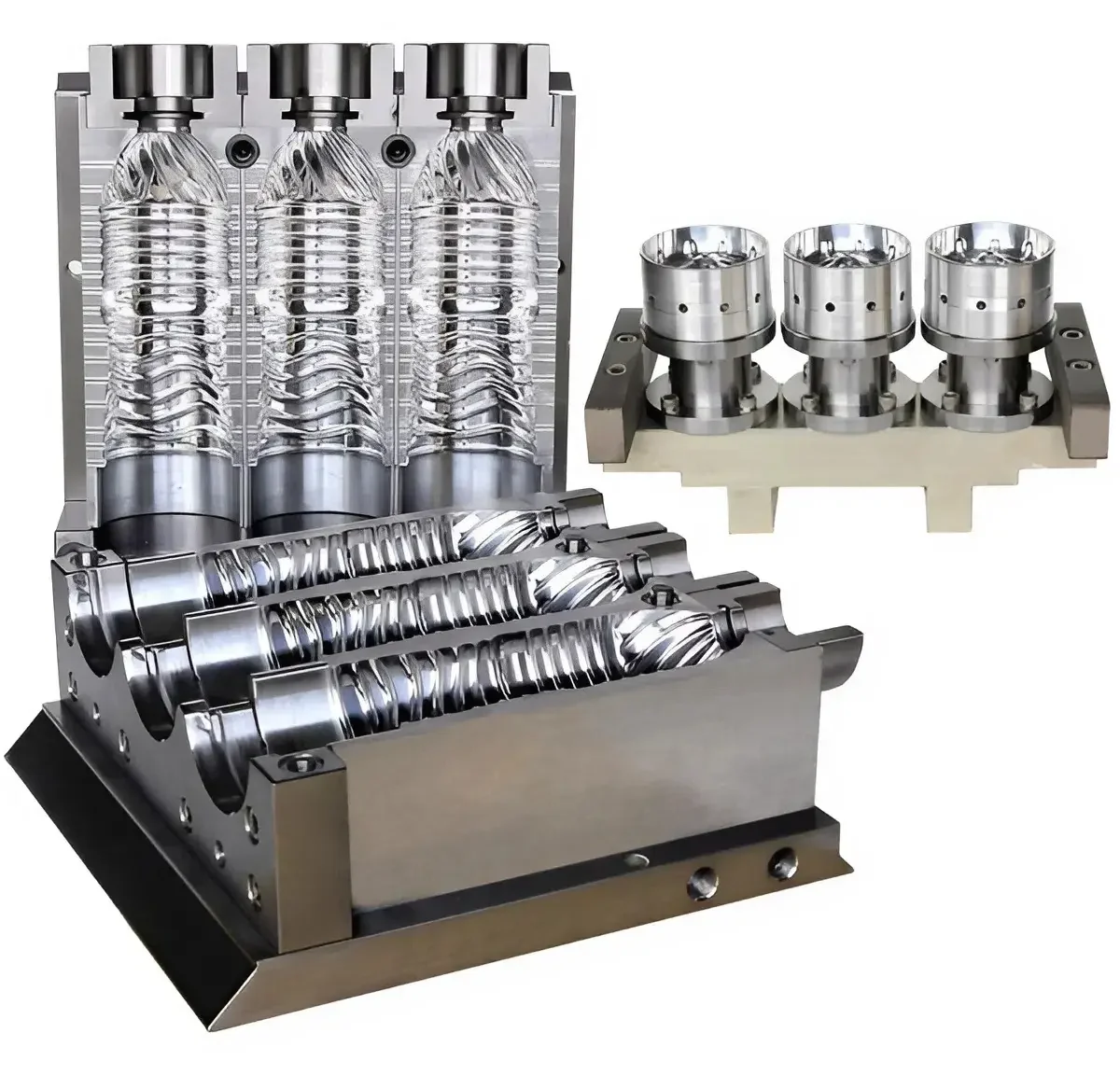


Bottle Blowing Mold is a modern and advanced technology for producing plastic bottles and containers. With bottle blowing molds, the process of manufacturing plastic bottles becomes simpler and more cost-effective compared to traditional production methods. The bottle blowing mold allows the production of plastic bottles with high precision, durability, and uniformity, helping increase productivity and minimize product defects.
The bottle blowing mold also enables the production of plastic bottles in various sizes and shapes, suitable for all customer production needs. In particular, this technology helps reduce environmental impact, as the bottle production process using blowing molds consumes less material and generates less waste.
With these advantages, the bottle blowing mold has become the optimal solution for plastic bottle manufacturing. If you are looking for an efficient and cost-saving method to produce plastic bottles, consider using the bottle blowing mold.

I. What Is a Plastic Bottle Blowing Mold?
A bottle blowing mold is a specialized tool used to shape products. The mold can be flexibly applied to various materials such as glass and plastic. The blow molding technology is used to form products such as plastic bottles, cans, jars, and PET bottles with consistent quality and high precision. The resulting products are free of air bubbles, ensuring both quality and aesthetic value.
See also: Bottle Cap Molding Mold
II. Structure of the Bottle Blowing Mold
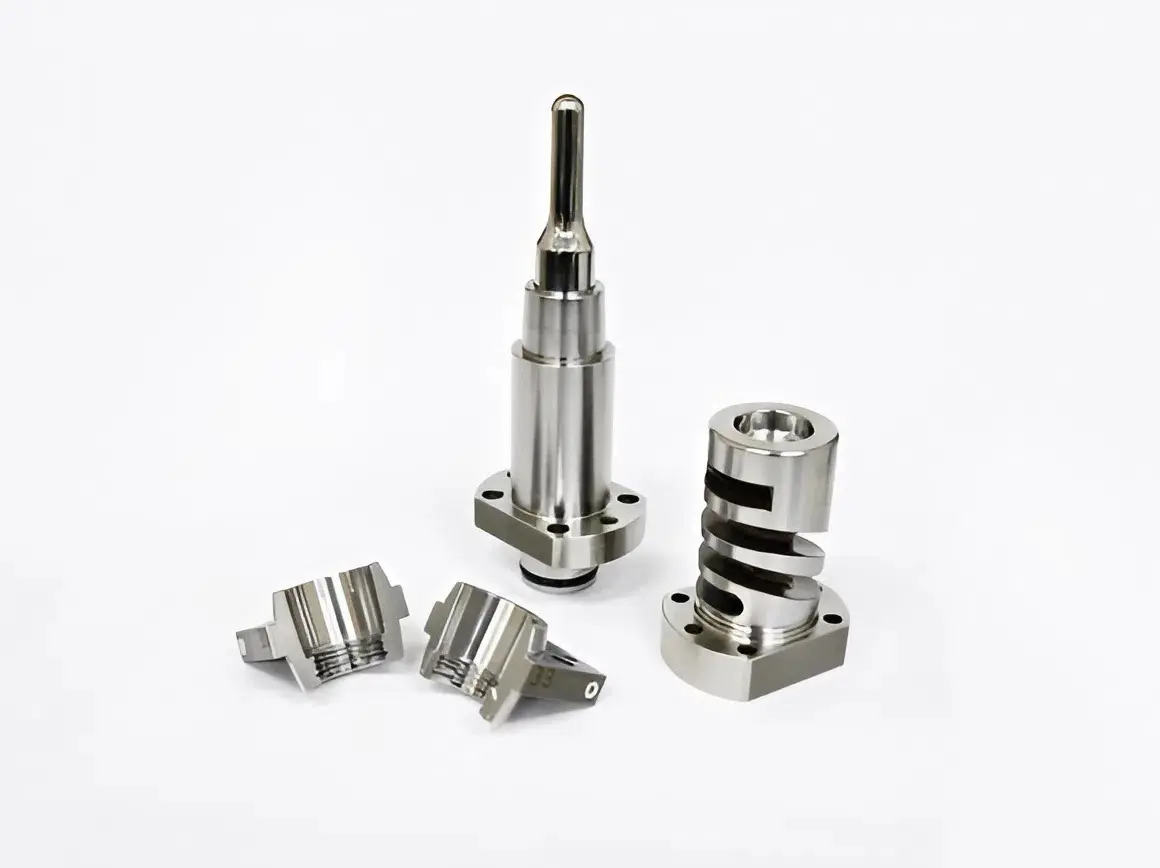
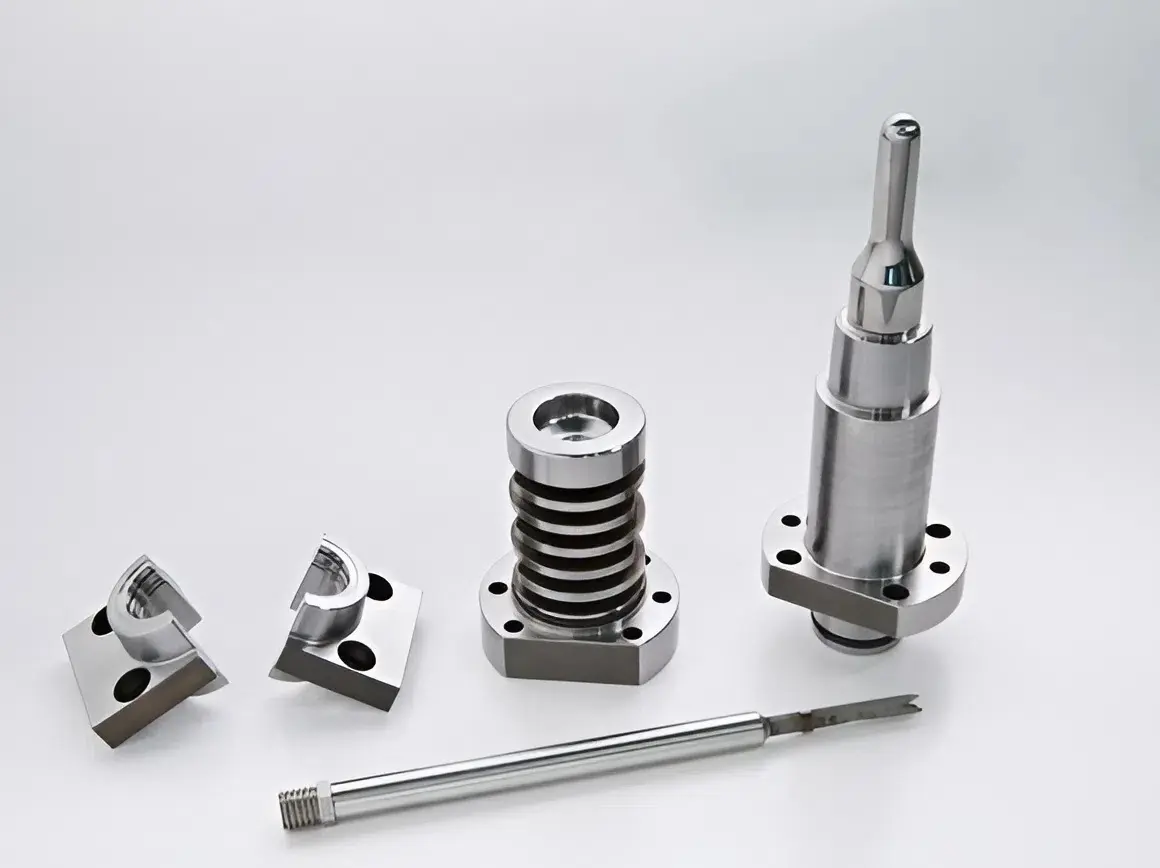
The plastic bottle blowing mold has a similar structure to other types of molds. Its main components include:
- Front clamping plate: Used to fix the female mold to the injection molding machine
- Male mold housing: Used to attach the male mold
- Female mold housing: Used to attach the female mold
- Support block: Creates clearance space for ejector pins and ejector plates to move
- Retainer plate: Keeps ejector pins from slipping out of the ejector plate
- Female mold: Forms the product shape
- Male mold: Forms the product shape
- Locating ring: Used to align the female mold with the injection machine
- Sprue bushing: Guides molten plastic from the nozzle into the runner
- Locating pin: Aligns and secures male and female molds when plastic enters the cavity
- Guide pin and guide bushing: Align the male and female molds along the runner
- Return spring and return pin: Used to push the retainer plate and ejector plate out of the mold
- Ejector pin: Used to push the finished product out of the mold
- Runner ejector: Used to eject leftover plastic material from the mold
III. Bottle Blowing Mold Operation Process
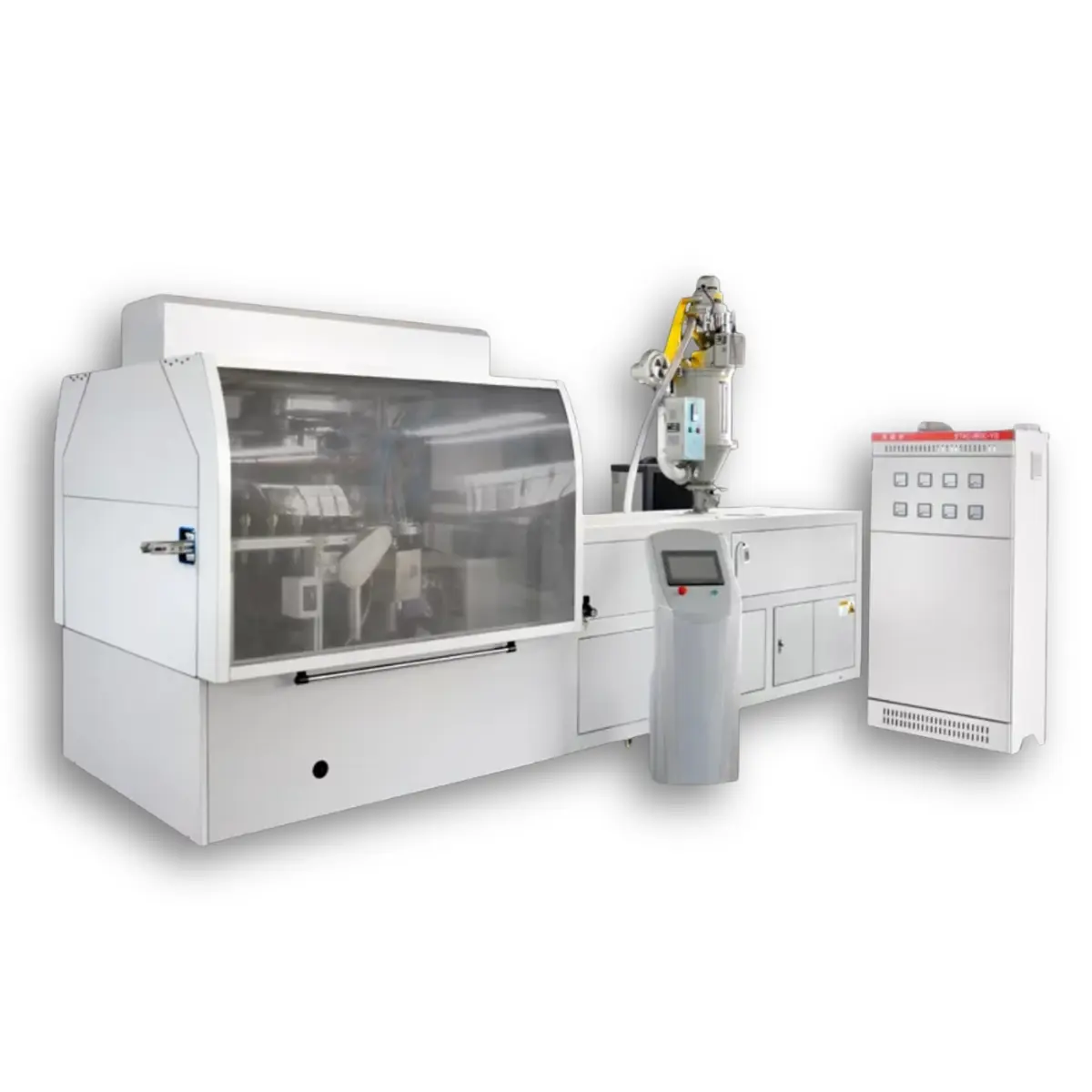
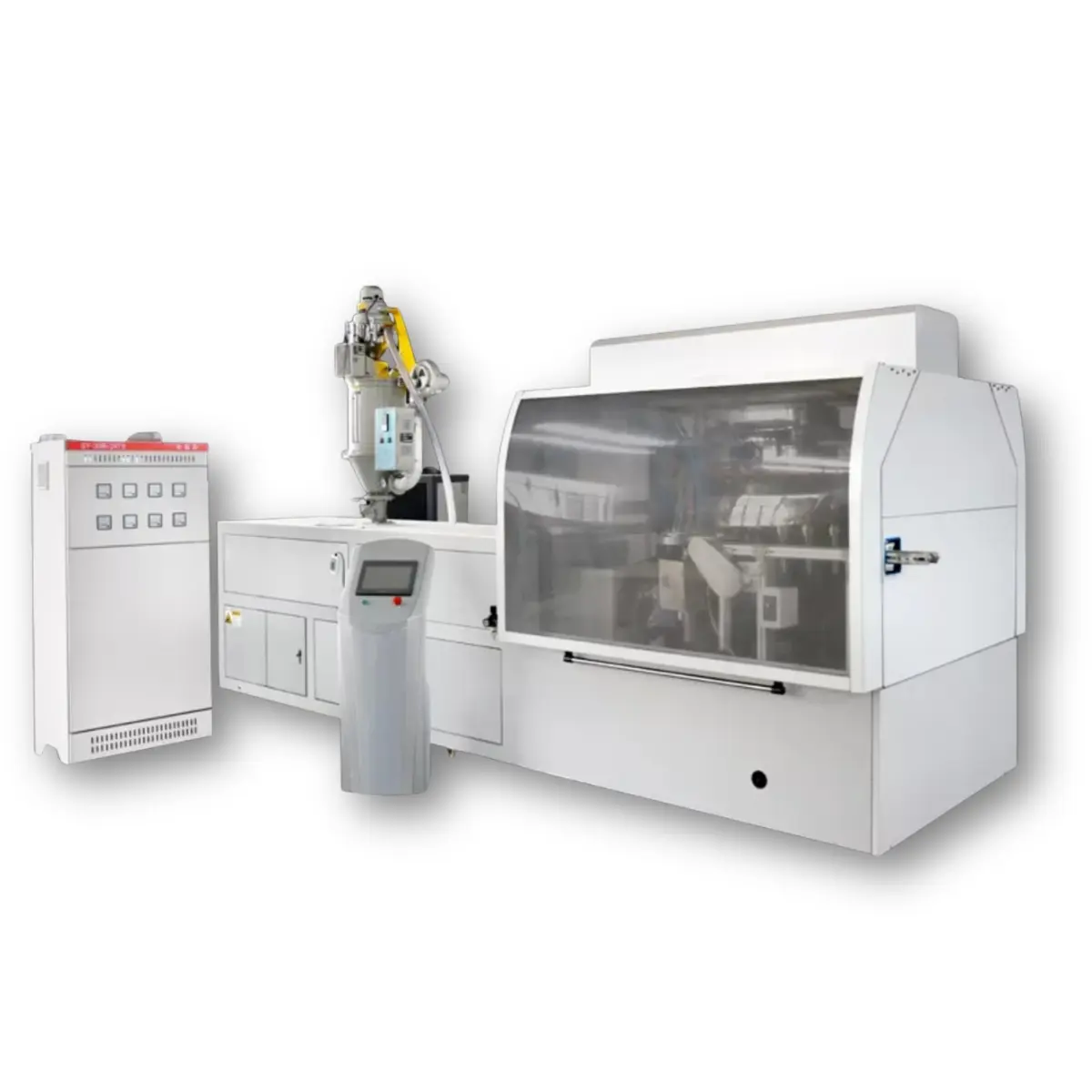
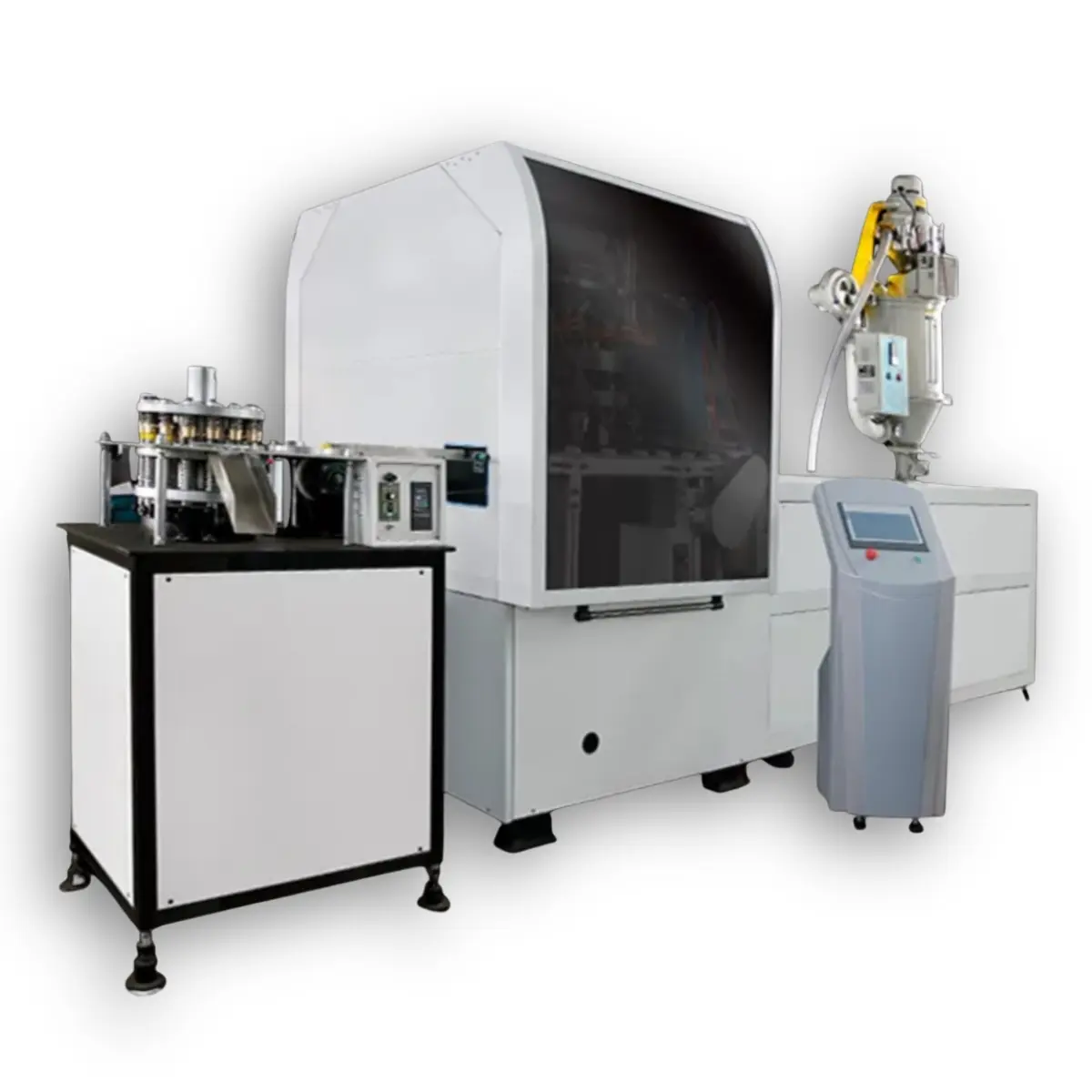
The working process of bottle blowing technology is relatively simple, consisting of 6 main steps to produce a complete product. PET bottle blowing technique
1. Step 1: Plastic Pellet Processing
In the first step, plastic pellets are fed into the screw extrusion system. For automatic machines, this process is fully automated. The pellets are conveyed through a conveyor system. For semi-automatic machines, the pellets are manually loaded by operators.
2. Step 2: Melting the Plastic
After entering the preform system, the plastic pellets are heated until they reach a molten state.
3. Step 3: Preform Creation
The heated plastic is cut into small segments before being transferred to the blowing system.
4. Step 4: Bottle Blowing
Inside the blowing machine, compressed air pressure expands the preform inside the mold cavity, shaping the final product.
5. Step 5: Cooling the Preform in the Mold
Once the mold cavity is filled, the cooling system activates to reduce the temperature of the plastic inside.
6. Step 6: Ejecting and Trimming the Product
After the mold opens, the blowing machine removes the excess plastic (flash) from the bottle, completing the production process.
IV. Common Types of Bottle Blowing Molds
Currently, there are many types of blowing molds. Each design produces a specific type of product. However, the two most commonly used types are plastic bottle molds and PET bottle molds.
1. Plastic Bottle Mold
The plastic bottle mold is a specialized mold used to form various products such as plastic bottles and jars. Most molds are made of aluminum or steel to enhance durability and lifespan. Using plastic bottle molds allows manufacturers to produce large quantities of bottles in a short time while ensuring product quality and avoiding defects such as deformation or leakage.
2. PET Bottle Mold
PET bottles include water bottles, fish sauce bottles, milk tea bottles, and more. These products are simple in structure and easy to mold. The bottle blowing technology enables fast, cost-effective production. PET bottle molds are typically made of steel, aluminum, or iron, providing high hardness, heat resistance, and pressure endurance.
See also: PET Preform Mold
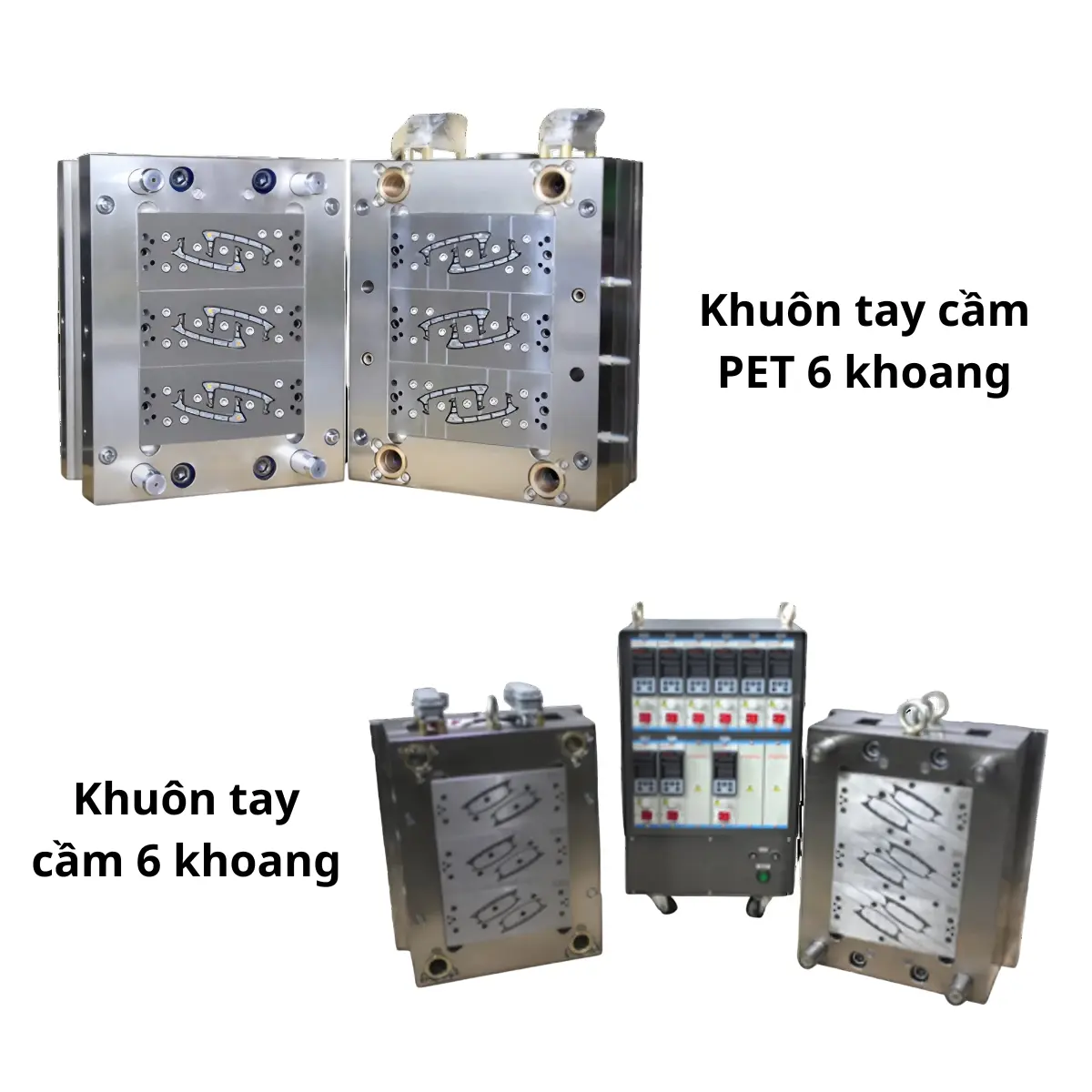
V. Bottle Blowing Mold Samples
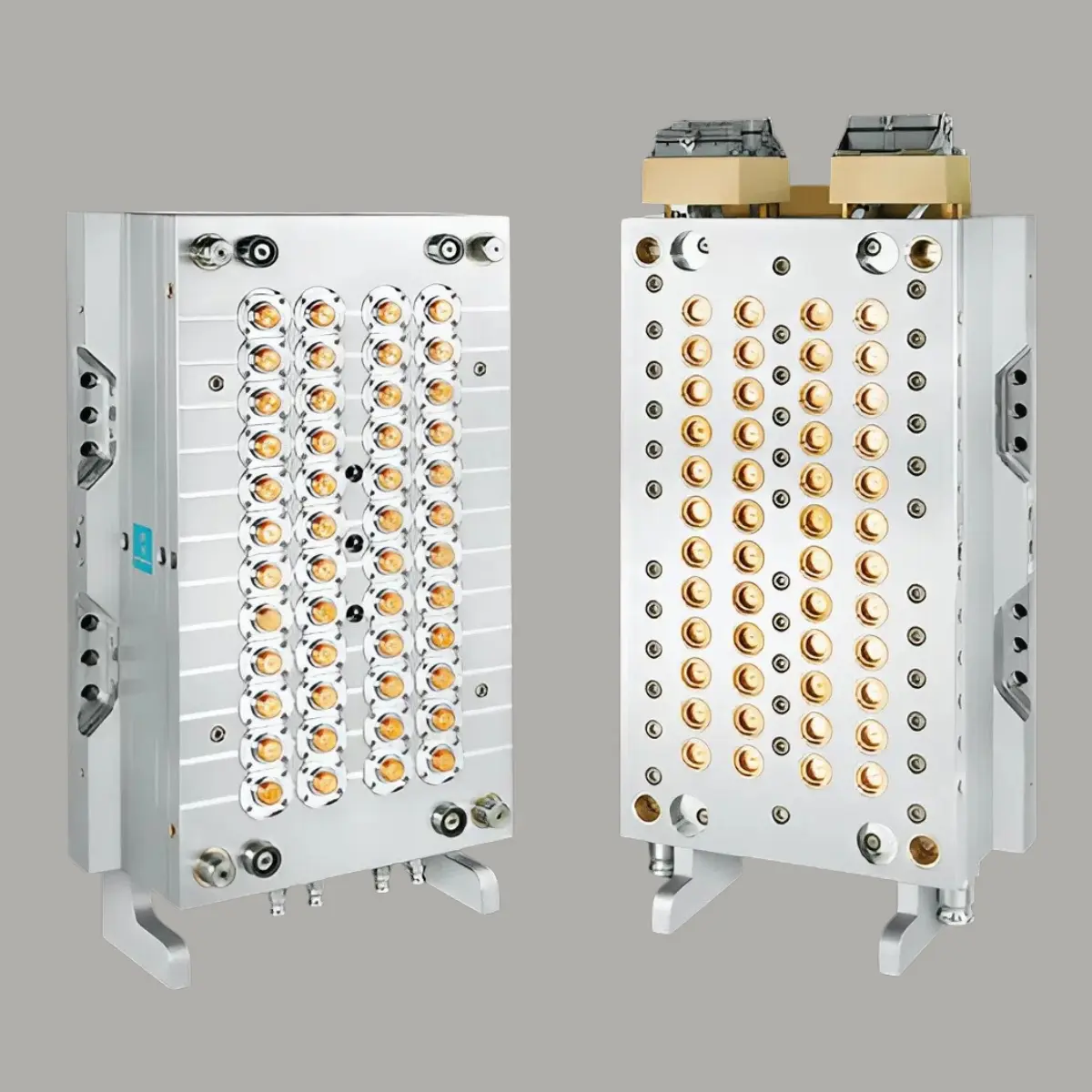
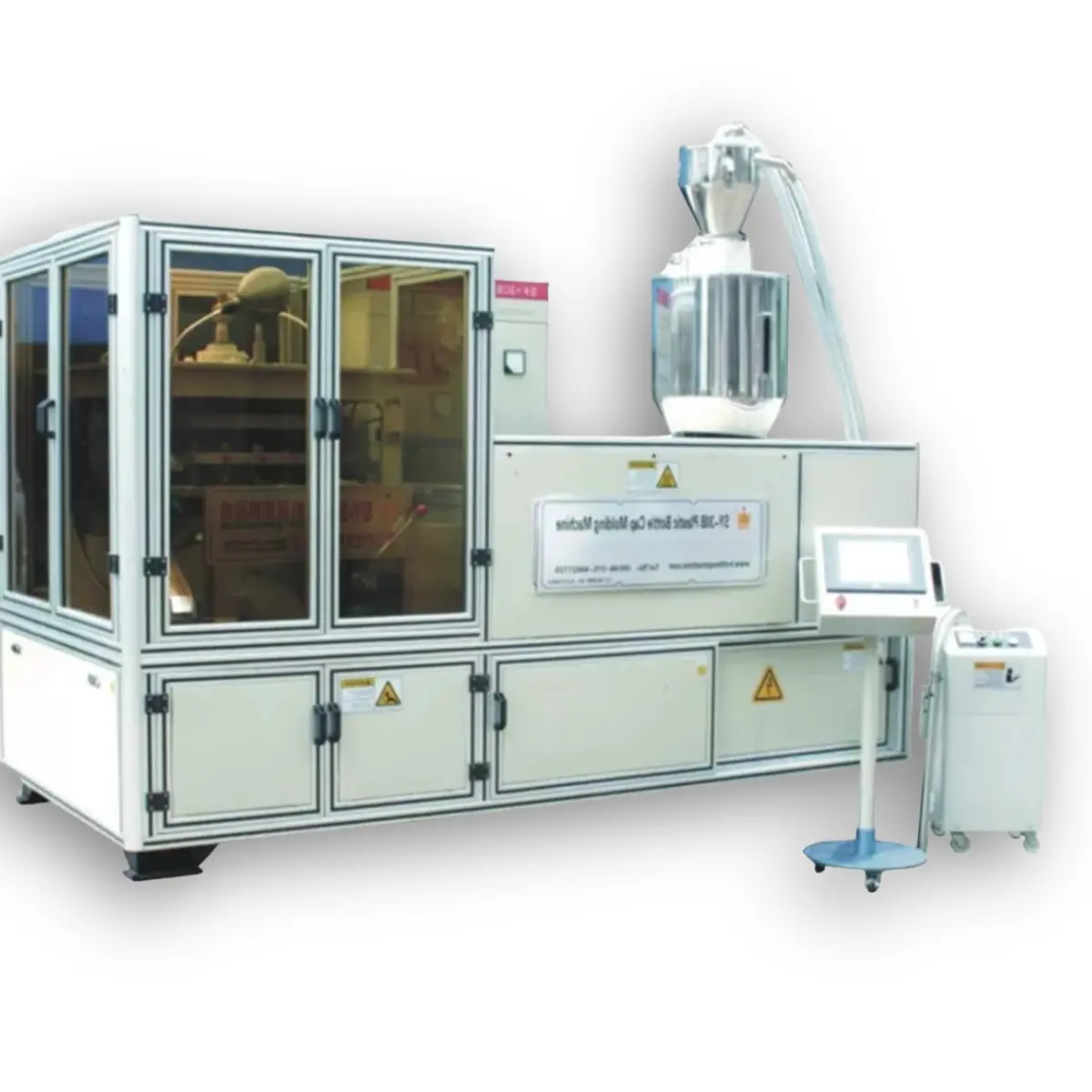
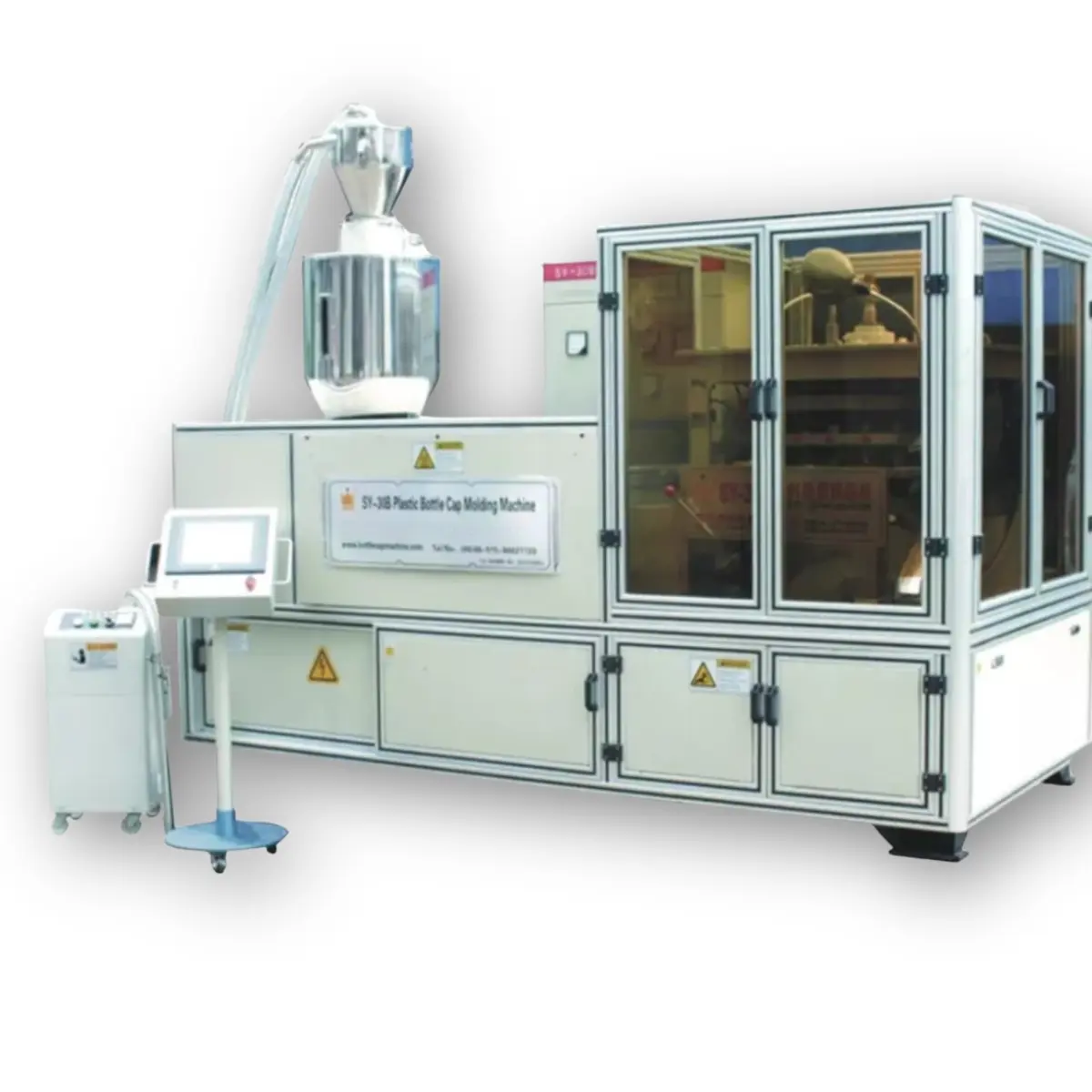
Bottle blowing molds do not follow a fixed standard. Each mold design varies in size and shape depending on customer requirements. However, all molds include the essential components needed for full assembly. Additionally, mold prices vary according to size and design complexity, and production time depends on the required precision level.
Nghi Tin Machinery – Leading Bottle Blowing Mold Supplier
Nghi Tin Trading Service Co., Ltd (NTMC) is a pioneer in PET bottle mold solutions in Vietnam. We specialize in providing genuine PET blowing molds and optimal solutions for industrial production lines in packaging, food, textile, electronics, and medical industries.
With an experienced technical team and dedicated after-sales service, Nghi Tin Machinery is committed to delivering high-quality products, efficient solutions, and professional services — accompanying your business toward sustainable growth.



Reviews
There are no reviews yet.