
 Home
Home About Us
 Services
 Products
 Activities
 News
News Contact
The Importance of Choosing a Reputable Air Compressor Supplier
Choosing a reputable air compressor supplier is not simply about buying a piece of equipment; it’s about building a long-term partnership. The air compressor system is the heart of many production processes, from operating pneumatic equipment, spray painting, and packaging, to even the medical and food sectors. Therefore, the quality and reliability of the air compressor directly affect the productivity, product quality, and operating costs of the business. A poor-quality supplier can lead to serious consequences such as unstable machinery operation, high energy consumption, soaring maintenance and repair costs, and even production disruptions, financial losses, and reputational damage. Conversely, a reputable supplier will bring outstanding benefits, from guaranteed product quality and professional technical support services to performance and cost optimization solutions. They don’t just sell machines; they provide comprehensive solutions, from consulting on selecting the right machine type, installation, operation, periodic maintenance, to emergency repairs.
A reliable partner will always accompany the business, helping the compressed air system operate most efficiently and stably. Furthermore, reputable suppliers usually have extensive industry experience; they understand the challenges businesses face and can offer innovative, advanced solutions. Partnering with them not only helps solve current problems but also opens up opportunities for improvement and enhanced competitiveness in the future.
Conversely, a reputable supplier will bring outstanding benefits, from guaranteed product quality and professional technical support services to performance and cost optimization solutions. They don’t just sell machines; they provide comprehensive solutions, from consulting on selecting the right machine type, installation, operation, periodic maintenance, to emergency repairs.
A reliable partner will always accompany the business, helping the compressed air system operate most efficiently and stably. Furthermore, reputable suppliers usually have extensive industry experience; they understand the challenges businesses face and can offer innovative, advanced solutions. Partnering with them not only helps solve current problems but also opens up opportunities for improvement and enhanced competitiveness in the future.
Impact on Production Efficiency
The compressed air system plays a key role in many production processes. From operating automation equipment and industrial robots to packaging, spray painting, cleaning stages… all require a stable and quality source of compressed air. A reputable air compressor supplier will ensure the provision of equipment with optimal operating performance, high durability, and low energy consumption. This directly helps businesses increase labor productivity, minimize downtime due to machine failures, and significantly save on electricity costs. Conversely, poor-quality air compressors can cause pressure drops, unstable airflow, leading to inefficient operation of pneumatic equipment, slowing down production progress, and even damaging other equipment in the system. Choosing the right supplier also helps businesses access the latest technologies, optimizing production processes and improving output product quality.
Reducing Operating and Maintenance Costs
The operating and maintenance costs of air compressors account for a significant portion of total production costs. A professional air compressor supplier will help businesses effectively control and minimize these costs. High-quality air compressors typically have longer lifespans, fewer breakdowns, and require less periodic maintenance. Moreover, reputable suppliers often provide professional maintenance service packages, helping to detect potential problems early and fix them promptly, avoiding major breakdowns and extending the machine’s life. They can also provide energy management solutions, helping businesses optimize compressed air usage and significantly reduce electricity costs. Using genuine replacement parts from a trusted supplier also ensures the quality and durability of the system, avoiding risks associated with parts of unknown origin.Ensuring Labor Safety and Environmental Protection
Labor safety and environmental protection are increasingly important factors in business production activities. A responsible air compressor supplier will provide products that meet strict safety and environmental standards. Modern air compressors are designed to minimize noise, vibration, and emissions released into the environment. Choosing equipment from reputable suppliers helps businesses comply with labor safety and environmental regulations, creating a safe and healthy working environment for employees. Furthermore, these suppliers often have programs for recycling lubricating oil and parts, contributing to minimizing negative environmental impacts. They can also advise businesses on oil-free compressed air solutions, which are particularly important in sensitive industries like food, pharmaceuticals, and medical, ensuring product quality and consumer safety.Factors to Consider When Choosing an Air Compressor Supplier
Choosing a suitable air compressor supplier requires careful consideration based on various factors. It’s not just about price, but also product quality, support services, market reputation, and the ability to provide comprehensive solutions. Each business has its own specific needs and operating conditions; therefore, carefully evaluating these factors will help make the optimal decision. A good supplier will not only sell machines but also become a partner, helping the business effectively and sustainably solve issues related to the compressed air system.Experience and Reputation in the Market
Experience and reputation are two of the most important factors when evaluating an air compressor supplier. A supplier with many years of experience in the industry will better understand different types of air compressors, various applications, and the challenges businesses may face. They have accumulated the knowledge and skills to provide accurate advice and optimal solutions. A supplier’s reputation is built on product quality, customer service, and the ability to meet commitments. You can learn about a supplier’s reputation through reviews from previous customers, implemented projects, or quality certifications they have achieved. A reputable air compressor supplier will always prioritize customer interests and strive to deliver maximum satisfaction. They often have a long list of satisfied customers and are willing to share references.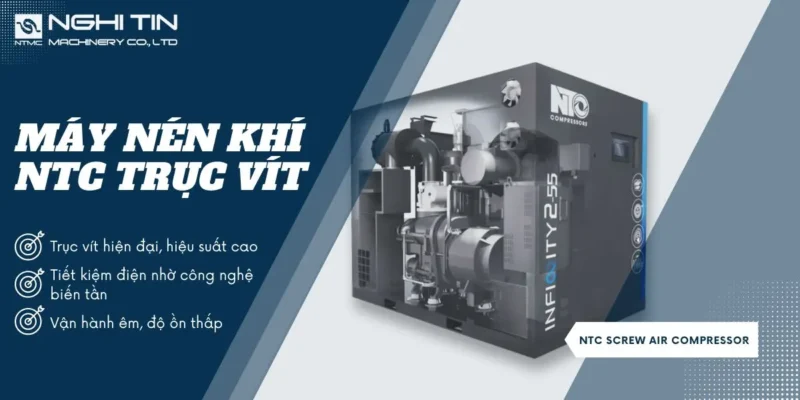
Product Quality and Technology
Product quality is the core factor determining the efficiency of the compressed air system. A reliable air compressor supplier will only provide high-quality products from world-renowned brands. They will have full certifications of product quality and origin. Additionally, the ability to apply advanced technology is a major plus. Modern air compressors use Variable Speed Drive (VSD) technology to save significant energy, intelligent control systems to optimize operation, and advanced filters to ensure compressed air quality. Choosing an air compressor supplier that always updates and applies new technologies will help businesses improve production efficiency and reduce long-term operating costs. They can also advise on network connectivity solutions, allowing businesses to monitor and control the compressed air system remotely, enhancing management capabilities and responsiveness.After-Sales Support Services
After-sales support services are often overlooked but are extremely important. A professional air compressor supplier will provide comprehensive support services, from installation, trial operation, user training, to periodic maintenance and emergency repairs. They should have a team of experienced, well-trained technicians ready to support customers whenever needed. Quick response and troubleshooting times are key to minimizing production system downtime. Furthermore, the ability to provide genuine replacement parts promptly is also a major advantage. A good air compressor supplier will build long-term relationships with customers, provide periodic maintenance service packages, and always be ready to support when the business encounters problems. They can also provide training programs for the business’s operating staff, helping them use and maintain the machinery most effectively.Ability to Provide Comprehensive Solutions
A truly professional air compressor supplier is not just a machine seller but a provider of comprehensive solutions for the business’s compressed air system. They can assess the specific needs of the business, advise on selecting the most suitable air compressor type in terms of capacity, type (screw, piston, centrifugal, etc.), and auxiliary equipment such as air dryers, filters, air receivers… They can design and install the entire compressed air system, ensuring synchronization and efficiency. Moreover, they can provide energy optimization solutions, remote monitoring systems, and contract maintenance services. Choosing an air compressor supplier capable of providing comprehensive solutions helps businesses save time, effort, and ensures the system operates at its best. They act as consulting partners, helping businesses make strategic decisions related to the compressed air system, ensuring sustainable development.Popular Types of Air Compressors and Practical Applications
The air compressor market is very diverse with many different types of machines, each with its own operating principle, advantages, disadvantages, and specific applications. Understanding the popular types of air compressors will help businesses make the choice that best suits their production needs. A professional air compressor supplier will be able to advise in detail on each type of machine, helping customers understand the differences and choose the optimal equipment for their specific application. This diversity reflects the different needs of various industries, from applications requiring large and continuous amounts of compressed air to those requiring oil-free air with high purity.Screw Air Compressors
Screw air compressors are the most common type of air compressor in industrial applications today. Their operating principle is based on two rotors (screws) rotating in opposite directions to compress the air. This type of machine has many outstanding advantages, making it the top choice for many businesses. The main advantages of screw air compressors are their ability to operate continuously, high efficiency, low noise, and minimal vibration. They can provide large and stable airflow, suitable for large-scale manufacturing plants operating continuously 24/7. Screw air compressors also have a long lifespan and relatively low maintenance costs compared to other types. However, the initial investment cost of screw air compressors is usually higher than that of piston compressors. Therefore, careful consideration is needed between the initial investment cost and long-term operating efficiency. A reputable air compressor supplier will advise in detail on screw air compressor lines from leading brands, helping businesses choose the product that best fits their budget and usage needs. They can also provide energy optimization solutions for screw air compressors, such as using Variable Speed Drive (VSD) technology, which significantly reduces electricity costs.Piston Air Compressors
Piston air compressors are the oldest type of air compressor and are still widely used in many applications, especially small applications that do not require continuous operation. Their operating principle is similar to an internal combustion engine, using a piston to compress air in a cylinder. The advantages of piston air compressors are their low initial cost, simple construction, and ease of maintenance and repair. They are suitable for applications that do not require large airflow and do not operate continuously, such as small repair workshops, auto garages, or household applications. However, piston air compressors have the disadvantage of higher noise and vibration compared to screw compressors and are not suitable for applications requiring continuous operation. Compressed air from piston compressors may also contain oil, so additional filtration is needed if clean compressed air is required. An experienced air compressor supplier will help the business assess whether a piston compressor is the right choice based on usage needs and investment budget. They can also provide noise and vibration reduction solutions for piston compressors or advise on suitable compressed air filters.Centrifugal Air Compressors
Centrifugal air compressors are used for applications requiring very large airflow and high pressure, commonly seen in heavy industries such as chemicals, oil and gas, and power generation. Their operating principle is based on accelerating air using a high-speed rotating impeller, then converting kinetic energy into pressure. The advantages of centrifugal air compressors are their ability to provide extremely large airflow, high efficiency, and very stable operation. However, this type of machine has a very high initial investment cost, complex construction, and requires intensive maintenance. It is not suitable for small applications or those requiring intermittent operation. Selecting and operating centrifugal air compressors requires high expertise. An air compressor supplier specializing in heavy industrial solutions will have the capability to supply and provide technical support for this type of machine. They will have a team of experienced engineers to advise, install, and maintain centrifugal air compressor systems, ensuring safe and efficient operation.Oil-Free Air Compressors
Oil-free air compressors are specially designed to provide absolutely clean compressed air, free of oil. This is extremely important in sensitive industries such as food, pharmaceuticals, medical, and electronics, where any contamination can have serious consequences. The operating principle of oil-free air compressors can be based on piston, screw, or centrifugal technology, but the key difference is the absence of lubricating oil in the compression chamber. Instead, special materials are used to reduce friction and temperature. The advantage of oil-free air compressors is the provision of clean air, ensuring product quality and consumer safety. However, this type of machine usually has a higher cost than oil-lubricated compressors and requires more intensive maintenance. An air compressor supplier specializing in clean air solutions will be able to provide oil-free air compressor lines that comply with the strict hygiene standards of each industry. They can also advise on additional compressed air treatment systems such as ultra-fine filters, adsorption air dryers, to ensure the compressed air reaches the highest purity level required by the application. Below is a summary comparison table of popular air compressor types:| Type of Air Compressor | Advantages | Disadvantages | Typical Applications |
|---|---|---|---|
| Screw | Continuous operation, high efficiency, low noise | High initial cost | Large-scale manufacturing, factories |
| Piston | Low cost, simple construction | High noise, vibration, not suitable for continuous operation | Small workshops, auto garages, household applications |
| Centrifugal | Extremely large airflow, high efficiency | Very high cost, complex construction | Heavy industry (chemicals, oil & gas, power) |
| Oil-Free | Absolutely clean air | Higher cost, more intensive maintenance | Food, pharmaceuticals, medical, electronics |
The Process of Selecting and Partnering with an Air Compressor Supplier
The process of selecting and partnering with an air compressor supplier is not a simple decision. It requires thorough preparation, objective evaluation, and effective negotiation. A professional process will help the business find the most suitable partner, ensuring the compressed air system operates efficiently and sustainably. From identifying needs, searching for potential suppliers, to evaluation, negotiation, and contract signing, each step plays an important role in establishing a successful partnership. Transparency and professionalism in this process will create a solid foundation for long-term and effective cooperation.Identifying Business Needs
The first and most important step in the supplier selection process is to clearly identify the business’s needs. This includes determining the required compressed air flow (usually in m³/min or cfm), required working pressure (usually in bar or psi), type of operation (continuous or intermittent), and other special requirements such as oil-free air, high purity, or the ability to operate in harsh environments. Accurately identifying needs will help narrow the search scope and select the most suitable air compressor in terms of capacity and features. Both current and anticipated future needs should be considered to choose a system that can be expanded or upgraded when necessary. A professional air compressor supplier will support the business in assessing this need through on-site surveys and operational data analysis. They may use flow and pressure measurement tools to provide the most accurate recommendations.Searching and Evaluating Potential Suppliers
After clearly identifying the needs, the next step is to search for potential air compressor suppliers in the market. Information can be found through online channels, referrals from industry partners, or by attending trade exhibitions. After having a list of potential suppliers, an evaluation should be conducted based on the criteria mentioned earlier, such as experience, reputation, product quality, after-sales support services, and the ability to provide comprehensive solutions. Suppliers can be requested to provide detailed product information, quotes, company profiles, and lists of past clients. Consulting with the supplier’s previous customers is also an effective way to assess satisfaction levels and service quality. A transparent and confident air compressor supplier will be willing to provide information and facilitate visits to implemented projects for potential customers.Negotiation and Contract Signing
After selecting one or a few of the most potential air compressor suppliers, proceed to negotiate prices, payment terms, delivery times, warranty policies, and accompanying support services. Ensure that all terms and commitments are clearly stated in the contract to avoid future disputes. The contract should include detailed information about the air compressor type, capacity, technical specifications, included accessories, installation scope, warranty period, maintenance procedures, and terms for handling incidents. Negotiation should not only be about price but also about building a sustainable partnership. A professional air compressor supplier will be flexible in negotiations and willing to offer optimal solutions for both parties. They will answer all questions and ensure the customer understands all terms before signing.Maintaining a Long-Term Partnership
Selecting and signing a contract with an air compressor supplier is just the beginning. To ensure the compressed air system operates efficiently and sustainably in the long term, it is necessary to maintain a good and regular relationship with the supplier. This includes adhering to the periodic maintenance schedule, promptly notifying the supplier of any issues that arise, and consulting them when there is a need to upgrade or expand the system. A good relationship will help the business receive quick support and priority when needed. The air compressor supplier can also provide updates on new technologies, promotional programs, or training courses for the business’s operating staff. Maintaining regular and open communication will help both parties develop and achieve common goals. They will be an important resource for solving emerging problems and ensuring the compressed air system always operates at peak performance.Conclusion
Choosing a reputable and suitable air compressor supplier is an important strategic decision that directly affects the production efficiency, operating costs, labor safety, and environmental protection of the business. By carefully considering factors such as experience, reputation, product quality, support services, and the ability to provide comprehensive solutions, businesses can find a reliable partner to accompany their sustainable development. A professional selection and cooperation process will help ensure that the compressed air system operates efficiently, stably, and optimizes benefits for the business in the long run.NGHI TIN GROUP
📍 Head Office: 8 Bis National Highway 13, Binh Hoa Ward, Lai Thieu, Thuan An, Binh Duong
📞 Hotline: 028 888 333 88
🏢 Northern Branch: BT2-G1 Hoan Son Project Residential Area, Tien Du, Bac Ninh
📞 Hotline: 0222 371 4188
🌐 Website: nghitin.vn
✉️ Email: sale@nghitin.vn