
 Home
Home About Us
 Services
 Products
 Activities
 News
News Contact
What Is An Air Compressor?
An air compressor is a machine that converts mechanical energy into compressed air by increasing air pressure inside a storage or distribution system. The compressed air is then delivered to production equipment, pneumatic tools, automation devices, and industrial processes. Unlike electricity, compressed air must be generated, treated, stored, and distributed before reaching the point of use. Because of this, an air compressor should not be viewed as an isolated piece of equipment—it is the core component of an integrated compressed air system. A typical industrial compressed air system includes:- Air compressor
- Air receiver tank
- Air dryer
- Air filters
- Distribution piping
- Pressure control devices
- Monitoring and control systems
Why is compressed air called the “fourth utility”?
Manufacturers often describe compressed air as the fourth utility, alongside electricity, water, and natural gas. Without compressed air, many production lines cannot operate because pneumatic systems control:- Automated machinery
- Production equipment
- Packaging systems
- Material handling
- Robotics
- Quality inspection devices
Key note:
An air compressor is only one part of a complete compressed air system. System design, air quality, pressure stability, and maintenance all influence overall performance.
Why Are Air Compressors Essential in Modern Manufacturing?
Nearly every manufacturing industry depends on compressed air in some capacity. Although the applications differ, the objectives remain similar: improve productivity, ensure process reliability, and support automation.Appliance
Compressed air is used for:
- Packaging
- Filling
- Conveying
- Bottle blowing
- Product handling
High-pressure compressed air is essential for PET bottle blowing processes.
Stable pressure directly affects:
- Bottle consistency
- Production speed
- Material usage
- Product quality
Wood processing facilities rely on compressed air for:
- CNC machinery
- Pneumatic tools
- Dust collection controls
- Spray finishing
- Material handling
Compressed air is frequently used where cleanliness is critical.
Typical applications include:
- Packaging
- Filling
- Process control
- Instrument air
Compressed air also supports:
- Assembly lines
- Machine automation
- Robotics
- Textile production
- Electronics manufacturing
- Automotive plants
Key note:
Modern manufacturing depends on compressed air not simply for powering equipment, but for ensuring consistent production quality, process reliability, and operational efficiency.
How Have Air Compressors & Systems Evolved in 2026?
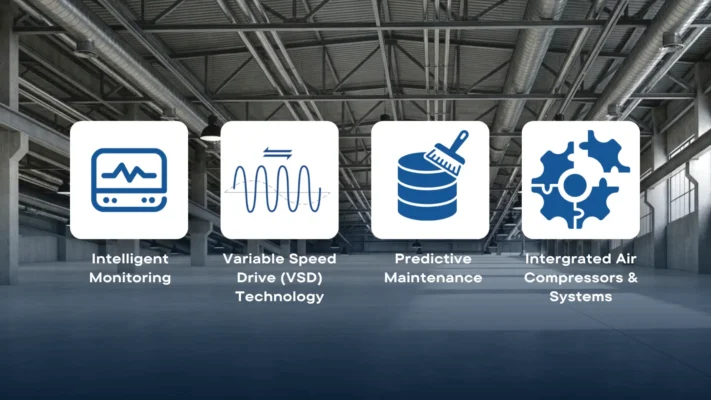
Intelligent Monitoring
Modern systems continuously monitor:- Air pressure
- Flow rate
- Power consumption
- Temperature
- Operating hours
- Maintenance intervals
Variable Speed Drive (VSD) Technology
Rather than operating at full capacity continuously, Variable Speed Drive compressors automatically adjust motor speed according to actual air demand. Benefits include:- Lower electricity consumption
- Reduced pressure fluctuations
- Improved equipment lifespan
- Better operational flexibility
Predictive Maintenance
Maintenance strategies are also changing. Instead of relying only on fixed service intervals, many manufacturers now use operational data to determine when maintenance is actually required. Predictive maintenance may analyze:- Temperature trends
- Vibration
- Pressure stability
- Energy consumption
- Component wear
Integrated Air Compressors & Systems
Today’s manufacturers increasingly optimize the entire compressed air system rather than focusing only on the compressor itself. System optimization may include:- Compressor selection
- Pipe network design
- Air storage sizing
- Leak management
- Pressure optimization
- Heat recovery
- Energy monitoring
Key note:
The biggest change in 2026 is the shift from purchasing compressors to optimizing complete compressed air systems based on production requirements, energy performance, and long-term reliability.
Understanding Industrial Air Compressor Efficiency
Many people assume industrial air compressor efficiency simply means consuming less electricity. In reality, efficiency is influenced by the performance of the entire compressed air system. A highly efficient compressor can still waste substantial energy if the surrounding system is poorly designed or improperly maintained. Factors that affect system efficiency include:- Correct compressor sizing
- Stable operating pressure
- Air leakage throughout the distribution network
- Clean filtration and air treatment
- Proper maintenance scheduling
- Efficient piping design
- Matching air supply with production demand
Key note:
Industrial air compressor efficiency is determined by how effectively the entire compressed air system converts electrical energy into useful compressed air—not by compressor specifications alone.
When Should Manufacturers Upgrade Their Compressed Air Systems?
One of the most common misconceptions is that a compressed air system only needs attention when it breaks down. In reality, waiting for equipment failure often leads to higher repair costs, unexpected production downtime, and unnecessary energy waste. A well-maintained system can operate reliably for many years. However, every manufacturing facility eventually reaches a point where upgrading becomes a better long-term investment than continuing to repair aging equipment. Rather than focusing on the age of the compressor alone, manufacturers should evaluate the overall performance of the compressed air system.Signs That an Upgrade May Be Necessary
Several indicators suggest that an existing system may no longer meet operational requirements.Increasing Energy Consumption
Energy typically accounts for the largest portion of a compressor’s lifetime cost. If electricity consumption continues to rise without a corresponding increase in production output, the system should be evaluated. Possible causes include:- Oversized compressors operating inefficiently
- Pressure losses throughout the distribution network
- Air leaks
- Outdated control systems
- Aging compressor components
Production Demand Has Changed
Manufacturing facilities rarely remain the same over time. New production lines, automation projects, additional pneumatic equipment, or expanded factory capacity all increase compressed air demand. A system originally designed years ago may no longer provide:- Required airflow
- Stable operating pressure
- Sufficient redundancy
- Future scalability
Maintenance Costs Continue to Increase
Routine maintenance is an essential part of any compressed air system. However, when major repairs become increasingly frequent, manufacturers should compare:- Annual maintenance expenses
- Energy consumption
- Downtime costs
- Productivity losses
- Investment required for modernization
Reliability Becomes a Business Risk
Unexpected compressor failures affect much more than maintenance budgets. They may result in:- Production interruptions
- Missed delivery schedules
- Product quality issues
- Overtime labor
- Customer dissatisfaction
Key note:
The best time to upgrade a compressed air system is before declining performance begins affecting production, operating costs, or customer commitments.
How Nghi Tin Helps Manufacturers Optimize Compressed Air Systems
At Nghi Tin (NTMC), we believe that every manufacturing facility has unique production requirements. Selecting the right compressed air solution should therefore begin with understanding the customer’s operating conditions rather than recommending a single compressor model or brand. Different industries require different approaches. For example:- PET bottle manufacturing requires stable high-pressure compressed air.
- Food and beverage facilities often prioritize clean, oil-free air.
- Woodworking factories focus on reliability in dusty operating environments.
- Pharmaceutical manufacturers emphasize air quality and process consistency.
- General manufacturing plants frequently seek higher energy efficiency and long-term operating reliability.
- Production process evaluation
- Compressed air demand analysis
- System design and engineering
- Equipment selection based on application requirements
- Energy efficiency assessment
- Installation and commissioning
- Preventive maintenance planning
- Long-term technical support and system optimization
- Reliable
- Energy efficient
- Easy to maintain
- Scalable for future expansion
- Optimized for the lowest practical lifecycle cost
The most effective compressed air solution is not determined by brand alone. It is determined by how well the complete system supports a manufacturer’s production goals, operational reliability, and long-term business growth.
FAQ
What is an industrial air compressor?
An industrial air compressor is a machine designed to generate compressed air for manufacturing processes, automation systems, pneumatic equipment, and industrial applications. It forms the foundation of a complete compressed air system.
Why is industrial air compressor efficiency important?
Efficient compressed air systems consume less energy, reduce operating costs, improve equipment reliability, and minimize production downtime. Since electricity represents a significant portion of lifecycle costs, efficiency directly impacts profitability.
What industries use compressed air systems?
Compressed air is widely used across industries including:
- Food and beverage
- PET bottle manufacturing
- Pharmaceuticals
- Woodworking
- Electronics
- Automotive
- Packaging
- General manufacturing
How often should compressed air systems be inspected?
Inspection frequency depends on operating hours, production environment, and manufacturer recommendations. Facilities operating continuously or in dusty environments should perform regular preventive inspections to maintain system performance.
How do manufacturers choose the right compressed air solution?
The right solution depends on several factors, including required airflow, operating pressure, air quality, production schedule, energy objectives, maintenance strategy, and future expansion plans. A system assessment is often the best starting point before selecting equipment.
Key takeaway
In 2026, air compressors are no longer viewed as standalone machines—they are essential components of integrated air compressors & systems that influence productivity, energy consumption, and operational resilience. Improving industrial air compressor efficiency requires more than selecting new equipment; it demands a comprehensive approach to system design, performance monitoring, preventive maintenance, and lifecycle optimization. By evaluating compressed air systems as strategic production assets rather than isolated machines, manufacturers can reduce operating costs, improve reliability, and support sustainable growth. With an engineering-first approach and application-based system design, Nghi Tin Machinery helps businesses implement compressed air solutions that align with their production processes, operational goals, and long-term development strategies.
NGHI TIN MACHINERY
- Head Office: 8 Bis Highway 13, Binh Hoa Quarter, Lai Thieu Ward, Thu Dau Mot City, Binh Duong Province
- Hotline: 0937168008
- Northern Branch: BT2-G1 Hoan Son Project Residential Area, Tien Du, Bac Ninh
- Hotline: 0388848333
- Website: nghitin.net
- Email: sale@nghitin.vn
Leave a Reply
You must be logged in to post a comment.