Why Every Beverage Production Line Needs a Stable Air Compressor: The Complete Guide for Industrial Efficiency
The principle of air compressor operation for a modern beverage production lineAn air compressor is one of the most critical utilities in every modern beverage production line. From PET bottle blowing and bottle filling to conveying, labeling, and packaging, compressed air supports nearly every stage of beverage manufacturing. Understanding the principle of air compressor operation helps manufacturers improve industrial air compressor performance, reduce energy consumption, and maintain stable production. Even advanced bottle blowing equipment such as the AOKI machine depends on clean, stable compressed air to produce high-quality PET bottles consistently.As beverage manufacturers continue investing in automation and higher production capacity, compressed air is no longer viewed as a simple utility. It has become a strategic production resource that directly influences product quality, operational efficiency, equipment reliability, and long-term operating costs.This guide explains why compressed air plays such a vital role in beverage manufacturing, how a stable compressed air system improves production performance, and what manufacturers should consider when optimizing their compressed air infrastructure.
Why Is Industrial Air Compressor Essential for Beverage Production?
Modern beverage factories rely heavily on compressed air because almost every automated process requires pneumatic power.Unlike electricity, compressed air provides a clean, flexible, and reliable energy source for production equipment operating throughout the factory.Typical applications include:
PET bottle blowing
Bottle filling
Cap tightening
Conveyor systems
Pneumatic cylinders
Product sorting
Packaging machines
Palletizing systems
Since these processes are interconnected, even a brief interruption in compressed air supply can reduce production efficiency or stop an entire production line.For this reason, manufacturers increasingly treat compressed air as a critical production utility alongside electricity, water, and steam.
Stable Air Means Stable Production
A stable compressed air system helps manufacturers achieve:
Consistent production speed
Higher equipment reliability
Better product quality
Reduced production downtime
Lower maintenance costs
Improved energy efficiency
Conversely, unstable pressure may cause pneumatic equipment to respond inconsistently, reducing the overall efficiency of the production line.
A Small Example: PET Bottle Blowing
Bottle blowing is one of the production stages that requires particularly stable compressed air.For example, PET bottle blowing equipment such as the AOKI machine uses high-pressure compressed air to form bottles with consistent dimensions and wall thickness. If air pressure fluctuates or compressed air quality is poor, bottle defects, material waste, and production instability may increase.Although the AOKI machine is just one example of modern bottle blowing technology, the same compressed air requirements apply to most PET bottle manufacturing systems used throughout the beverage industry.
Key note:
Air compressor is not simply an energy source—it is a production utility that directly affects efficiency, product quality, and operational reliability across the entire beverage production line.
Understanding the Principle of Air Compressor Operation
To optimize a compressed air system, manufacturers should first understand the principle of air compressor operation.An air compressor converts mechanical energy into compressed air by drawing atmospheric air into a compression chamber, increasing its pressure, and delivering it to the production system.However, producing compressed air is only the first step.A complete compressed air system also includes:
Air dryers
Air filters
Air receivers
Distribution piping
Pressure regulators
Monitoring and control systems
Each component contributes to maintaining stable pressure and clean compressed air throughout the production process.
Why System Design Matters More Than Compressor Size
Many manufacturers assume that purchasing a larger compressor automatically improves production.In reality, system performance depends on multiple factors, including:
Compressor sizing
Pressure stability
Air storage capacity
Pipe network design
Moisture removal
Filtration efficiency
Preventive maintenance
An oversized or poorly configured system may consume more electricity while delivering little improvement in production performance.Modern beverage factories therefore focus on optimizing the complete compressed air system rather than individual equipment.
Key note:
The principle of air compressor operation extends beyond compression itself. Long-term production performance depends on how effectively the complete compressed air system delivers clean, stable air to every production process.
How Stable Compressed Air Improves Production Efficiency
Compressed air influences far more than pneumatic tools.Throughout a beverage production line, stable air pressure contributes to consistent operation in multiple production stages.For example:
Bottle blowing requires stable pressure to maintain bottle quality.
Filling equipment depends on accurate pneumatic control.
Packaging systems require reliable actuator movement.
Conveyor systems rely on consistent pneumatic automation.
Quality inspection equipment performs more accurately with stable air supply.
When compressed air remains stable, manufacturers can reduce production interruptions, minimize rejected products, and improve overall equipment effectiveness (OEE).As production capacity increases, these improvements become even more valuable because small efficiency gains can translate into significant long-term cost savings.
Key note:
A stable compressed air system supports higher productivity, better product consistency, and improved operational efficiency throughout the entire beverage manufacturing process.
Common Problems Caused by Unstable Compressed Air
Many manufacturers only notice the importance of compressed air when production problems begin to appear. However, unstable compressed air often develops gradually and may remain unnoticed until it starts affecting productivity and product quality.Understanding these common issues allows manufacturers to identify opportunities for improvement before they become costly production risks.
Inconsistent Bottle Quality
One of the first signs of compressed air instability is inconsistent bottle quality during PET bottle production.Pressure fluctuations can influence:
Bottle dimensions
Wall thickness distribution
Surface appearance
Bottle strength
Material consumption
These issues may increase rejection rates, reduce production efficiency, and create unnecessary material waste.
Reduced Filling Accuracy
Many beverage filling machines rely on pneumatic actuators to control valves and product flow.When compressed air pressure becomes unstable, manufacturers may experience:
Filling volume variations
Slower production cycles
Increased machine adjustments
Product losses
Maintaining consistent air pressure helps improve filling accuracy while supporting continuous production.
Increased Equipment Downtime
Compressed air powers numerous pneumatic components throughout the production line.If air supply becomes unstable, equipment may experience:
Unexpected shutdowns
Pneumatic valve failures
Slow actuator response
Production interruptions
Frequent maintenance requirements
Although individual interruptions may appear minor, repeated downtime significantly reduces Overall Equipment Effectiveness (OEE).
Higher Energy Consumption
Many factories assume that installing a larger compressor automatically improves production.In reality, poor system management often results in unnecessary energy losses caused by:
Air leakage
Pressure drops
Oversized equipment
Poor piping design
Inadequate maintenance
Inefficient compressor control
Since electricity typically represents the largest operating cost of a compressed air system, improving system efficiency often delivers the fastest financial return.
Key note:
Most compressed air problems originate from system performance rather than the compressor itself. Stable pressure, clean air, and efficient system design are equally important for reliable beverage production.
How to Improve Industrial Air Compressor Performance
Improving an industrial air compressor is not simply about replacing equipment. The greatest gains often come from optimizing how the entire compressed air system operates.Manufacturers should evaluate both equipment performance and system efficiency together.Several practical improvements can significantly enhance long-term performance.
Design the System Around Production Demand
Compressed air systems should match actual production requirements.Engineers typically evaluate:
Required airflow
Operating pressure
Peak demand
Future production expansion
Equipment redundancy
Proper sizing improves operational stability while reducing unnecessary energy consumption.
Maintain Stable Air Quality
Clean, dry compressed air protects production equipment and supports product quality.A well-designed system should include:
Appropriate air filtration
Efficient air dryers
Moisture control
Routine filter replacement
Regular air quality inspection
These measures help reduce contamination while extending equipment life.
Reduce Energy Losses
Energy optimization should focus on the complete compressed air network rather than the compressor alone.Manufacturers should regularly inspect:
Air leaks
Pressure losses
Compressor loading patterns
Distribution piping
Control settings
Small improvements throughout the system often generate significant long-term energy savings.
Implement Preventive Maintenance
Rather than waiting for failures, preventive maintenance helps maintain consistent performance throughout the equipment lifecycle.Typical maintenance activities include:
Filter inspection
Oil and lubricant replacement (where applicable)
Dryer maintenance
Leak detection
Pressure verification
Performance monitoring
A structured maintenance program reduces unexpected downtime while improving overall system reliability.
Key note:
Optimizing an industrial air compressor requires continuous improvement of the entire compressed air system, from equipment selection and air treatment to maintenance and energy management.
How Nghi Tin Machinery Supports Beverage Manufacturers
How Nghi Tin supports beverage manufacturers with efficient industrial air compressor solutionsEvery beverage factory operates under different production conditions. Production capacity, bottle sizes, automation levels, and hygiene requirements all influence compressed air system design.For this reason, Nghi Tin Machinery (NTMC) approaches each project from a system engineering perspective rather than recommending a single compressor model or brand.Before proposing a solution, NTMC evaluates factors such as:
Production process
Air demand
Operating pressure
Air quality requirements
Energy consumption
Future expansion plans
Maintenance objectives
Based on this assessment, our engineering team designs compressed air solutions that align with the customer’s production goals.NTMC’s technical services include:
Compressed air system consultation
System design and engineering
Equipment selection based on application
Installation and commissioning
Preventive maintenance planning
Energy efficiency assessment
Long-term technical support
Because different industries have different operational requirements, NTMC works with multiple internationally recognized compressor technologies and equipment manufacturers. This allows customers to receive solutions tailored to their production environment instead of being limited to a single equipment brand.For beverage manufacturers, the objective is straightforward:
Stable production
Reliable compressed air quality
Improved operational efficiency
Lower lifecycle costs
Sustainable long-term performance
FAQ
Why is compressed air so important in a beverage production line?
Compressed air powers bottle blowing, filling, packaging, conveying, and many pneumatic control systems. Stable compressed air helps maintain product quality and continuous production.
Does every beverage factory require clean compressed air?
Yes. Although the required air quality depends on the application, clean and properly treated compressed air helps protect equipment, reduce contamination risks, and improve production reliability.
Does bottle blowing require stable compressed air?
Yes. Bottle blowing relies on stable pressure and clean compressed air to produce bottles with consistent dimensions and quality. Equipment such as the AOKI machine is one example where stable compressed air contributes to reliable bottle-forming performance.
How can manufacturers improve industrial air compressor efficiency?
Manufacturers should optimize the complete compressed air system by reducing air leakage, maintaining stable pressure, improving air treatment, implementing preventive maintenance, and selecting equipment appropriate for production demand.
Should manufacturers replace the compressor or optimize the existing system?
Not always. In many cases, improving system design, maintenance practices, and energy management delivers substantial performance gains without requiring complete equipment replacement.
Key takeaway
A modern beverage production line depends on far more than production equipment alone. A reliable air compressor and a well-designed compressed air system provide the stable pressure, clean air, and operational consistency required for bottle blowing, filling, packaging, and factory automation. Understanding the principle of air compressor operation and continuously improving industrial air compressor performance help manufacturers reduce energy consumption, increase production reliability, and maintain consistent product quality. While equipment such as the AOKI machine demonstrates the importance of stable compressed air in PET bottle blowing, the broader objective is to optimize the entire compressed air system so it supports efficient, sustainable, and high-quality beverage manufacturing.
NGHI TIN MACHINERY
Head Office: 8 Bis National Route 13, Binh Hoa Quarter, Lai Thieu Ward, Ho Chi Minh City
Hotline: 0937.168.008
Northern Branch: BT2-G1 Hoan Son Project Residential Area, Tien Du, Bac Ninh

 Home
Home About Us
 Services
 Products
 Activities
 News
News Contact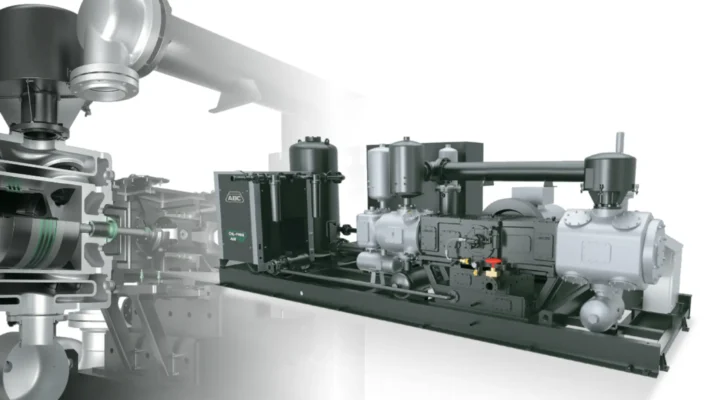

Leave a Reply
You must be logged in to post a comment.